September 24, 2009 - Oslo, Norway
Opera Mini further asserted its claim as the world’s most popular mobile Web browser, as usage surged more than 10%, according to
Opera’s State of the Mobile Web report for August 2009.
Now, more than
31.9 million people use Opera Mini to browse the Web from their
mobile phones.
In August, Opera Mini gained at least one new user every second.
The report, published monthly, provides information on the top global trends affecting the mobile Web.
Industry insight from Opera
Every month Opera conducts the definitive analysis of the key trends affecting the mobile Web worldwide.
We publish these findings as the State of the Mobile Web. Each report provides the most frequently visited sites, key data metrics from Opera Mini and a snapshot of a specific trend chosen by the analysis team that month.
About Opera’s mobile portfolio
Opera is reinventing the Web for connected devices. Our two mobile products, Opera Mini and Opera Mobile, set the standard for mobile Web browsing on both feature phones and smartphones.
Tens of millions of people have discovered how Opera Mini can revolutionize their mobile Web experience. Not only does Opera Mini deliver the Web faster to your phone, it also displays the page just as it looks in your desktop browser.
Opera Zoom gracefully dives into the content for easy reading and interaction.
Opera Mini now also includes Opera Link, a free service that synchronizes your bookmarks, Speed Dial and personal bar between all your Web browsers.
Opera Mobile has been repeatedly selected by leading carriers and manufacturers that want to deliver the best Web experience to their customers.
Opera Mobile has shipped on more than 120 million mobile phones so far.
About the report & methodology
Information contained in this report is based on aggregated information obtained from Opera Mini servers.
The security and privacy of people who use Opera Mini is of paramount importance and we safeguard the trust they give us. Our privacy policy is available here.
The data presented in "Part 1: Growth" represents people who have downloaded Opera Mini. Those numbers do not reflect users of operator pre-installed versions of Opera Mini.
Countries selected for this report are the top 10 Opera Mini countries by usage.
Subsequent reports will include updates for these countries as well as different regions around the world.
All content analysis is based on a review of the Top 100 sites ranked according to page views in each country.
The designation of sites to specific categories has been done with local content experts who followed Opera's guidelines to characterize each site.
Demographic data was collected from voluntary user surveys that were made available to a random subset of Opera Mini users, via their handsets, in English, Russian, Chinese, German and Polish.
Surveys responses were collected between February 2008 and June 2008.
Due to the explicit and potentially offensive nature of their contents, adults-only sites have been excluded from our analysis.
Opera and the mobile world
Opera first developed a mobile browser in 1998.
Since then, we've been at the forefront of enabling a full Web experience on mobile phones. In 2005, we released Opera Mini, the first browser that could work on any phone with Java. Regardless of the hardware on the phone, Opera Mini is able to bring the full Web to many millions of people, some who otherwise would not be able to access it.
In addition to the top global trends and country snapshots, the report highlights trends in Europe and examines countries that may soon become world leaders in mobile Web usage.
Global trends
In August 2009, more than
31.9 million people used Opera Mini, a 9.9% increase from July 2009 and more than 147% compared to August 2008.
Those
31.9 million people viewed over
13.9 billion pages in August 2009. Since July, page-views have gone up 15.7%.
Since August 2008, page-views have increased 234%.
Opera Mini users generated nearly
209 million MB of data worldwide in August.
Since July, the data consumed went up by 11.7%.
Data in Opera Mini is compressed by up to 90%.
If this data were uncompressed, Opera Mini users would have viewed over 1.9 PB of data in August.
Since August 2008, data traffic is up 222%.
The top 10 countries for Opera Mini usage are (in order):
Russia, Indonesia, India, China, Ukraine, South Africa, United States, Nigeria, United Kingdom and
Poland.
There is no change to the top 10 countries this month.
Trends in Europe
The top 10 countries using
Opera Mini in Europe (not including the global top 10 countries) are
Germany, France, Czech Republic, Italy, Spain, Turkey, Netherlands, Slovakia, Lithuania and
Romania.
Growth rates in Europe:
Turkey leads the top 10 countries with 218.8% growth in users this year, followed by
France (100.7% growth) and
Czech Republic (72.2% growth).
As in several other regions around the world,
Google and
Facebook are popular among mobile Web users in Europe, surpassed only occasionally by country-specific search engines and social-networking sites.
Nokia and
Sony Ericsson handsets are ubiquitous in Europe, followed by a few popular
Samsung and
LG devices.
Gatecrashing the top 10?
Although the top 10 did not change this month, within the top 30 countries, several countries have exhibited rapidly accelerating user growth and may soon crack the top 10.
Usage in Vietnam, currently ranked 11, grew an impressive 20% month-over-month.
The
Philippines, Kenya and
France also stand close to displacing some of the countries in the top 10.
Over the past month, the fastest growing countries for
Opera Mini usage within the top 30 are
Australia (52% since July 2009),
Georgia (34%),
Vietnam (20%),
Kenya (19%),
France (16%),
Philippines (15%),
Brazil (14%),
Kazakhstan (13%),
Pakistan (11%) and
Malaysia (10%).
What we say
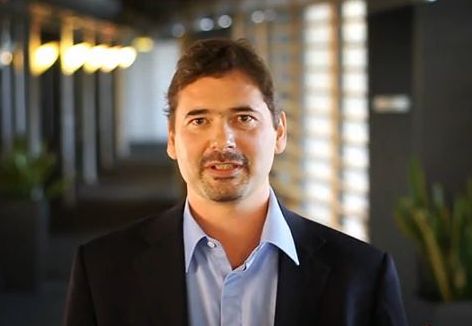
“Opera Mini proves that the key to sustained growth of the mobile Web is a capable browser,” said
Jon von Tetzchner, CEO, Opera.
 |
|
Jon S. von Tetzchner, Co-founder - Chief Executive Officer
|
| |
“We work hard to ensure that Opera Mini works on almost every mobile phone because we are on a mission to bring the Web to the world, and the mobile phone is the world’s most prevalent communications device. It is a question of when — not if — most people will access the Web with a mobile device, and Opera Mini is ready to help them get to that content quickly and affordably.”
State of the Mobile Report archive:
http://www.opera.com/smw/archive/
Video
Opera Mini 5 Beta Reviewers Guide
http://www.youtube.com/watch?v=joBaCW8abNE&feature=player_embedded
About Opera Software ASA
Opera Software ASA has redefined Web browsing for PCs, mobile phones and other networked devices.
Opera's cross-platform Web browser technology is renowned for its performance, standards compliance and small size, while giving users a faster, safer and more dynamic online experience.
Opera Software is headquartered in
Oslo, Norway, with offices around the world.
The company is listed on the
Oslo Stock Exchange under the ticker symbol
OPERA.
Learn more about Opera at
http://www.opera.com/
http://www.opera.com/press/releases/2009/09/24/
Contact us
Opera Software ASA
Waldemar Thranes gate 98
NO-0175 OSLO
NORWAY
Tel: +47 23 69 24 00
Fax: +47 24 16 40 01
Top new features
Tabbed browsing
Browse several Web sites at the same time. Jump easily from one to another.
Speed Dial
Your favorite sites are just one click away.
Touch & Keypad
The interface optimizes the display for both touchscreen and keypad phones.
Password manager
Log on to your e-mail, social network and other sites with just one click.
Popular features
Innovative and Easy-to-use
Living up to our vision of providing the best Internet experience on any device,
Opera Mini 5 boasts a powerful new user interface.
Merging the best from our desktop browser together with new innovations for mobile phones, Opera Mini is advanced, yet highly intuitive to use.
Tabs
With tabbed browsing, you no longer need to interrupt one session to start another. Use your Web mail in one window, Facebook in another, Twitter in a third and all that while checking the latest sports results.
With Opera Mini, you can easily identify the different tabs and jump between them.
Password manager
No more hassle with those hard-to-enter usernames and passwords.
Opera Mini 5 will remember your credentials, and you can log on to your favorite Web sites with just a single click. The passwords are stored on your phone for your convenience.
Full Web in your palm
When visiting a Web page, Opera Mini displays the overview of the page and suggests where to begin your reading before you zoom in.
Opera Mini also detects when on a Web page designed for a mobile phone and displays it optimally.
Touch & Keypad
The user interface has been designed for both touchscreen- and keypad-style mobile phones.
With a touchscreen, you can enjoy even easier navigation with our new zooming and kinetic scrolling.
Speed Dial
Get your favorite Web page with just one click. Speed Dial is a set of visual bookmarks you see when you open a new tab, like a dashboard for your on-line life.
To add a new page, simply click on an empty Speed Dial slot, and Opera will make suggestions based on your browsing history and bookmarks.
Built for speed
Time is precious. Opera Mini compresses pages by up to 90% before being sent to your phone, meaning faster page-load times than in other mobile Web browsers.
Find things faster
The new Opera Mini lets you search for text within a Web page, so you can get to the information you need even more quickly than before.
Power scrolling
Scroll at warp speed using your phone keypad or by dragging the page on a phone with a touchscreen.
http://www.opera.com/mini/next/
Håkon Wium Lie
CTO - Chief Technology Officer
 |
|
Håkon Wium Lie, CTO - Chief Technology Officer
|
| |
Håkon Wium Lie joined Opera in 1999 as the Chief Technology Officer.
Prior to his position at Opera, Wium Lie worked for W3C, where he proposed the concept of Cascading Style Sheets (CSS).
He is a knowledgeable speaker on languages for the Web, as well as the past, present and future of the Web.
Prior speaking engagements include XTech, International World Wide Web Conference Committee (IW3C2), Atypi and Seybold.
Wium Lie has also written for The Register, CNET and A List Apart.
After receiving his Master’s degree from MIT Media Lab, Wium Lie worked as a research scientist at Norwegian Telecom Research and later at CERN, the birthplace of the Web. From 1995 to 1999, Wium Lie worked for W3C, after which he joined Opera.
He has also received a PhD degree from the University of Oslo in 2006.
In 1999, Technology Review included him on the TR100 list, “a group of one hundred young innovators in technology from around the world”.
Wium Lie was also honored by the World Economic Forum (WEF) as one of the “Technology Pioneers” in 2000 and 2001.
In his spare time, Wium Lie enjoys spending time with his family, listening to classical music, painting, driving his electric car and fighting advertising. He currently resides in Oslo, Norway.
Lie owns 5.95% of Daland AS, an investment company which holds 17,012,824 shares in Opera Software.
After exercising options, Håkon Wium Lie holds 80,000 unexercised options in the Company.
Jon S. von Tetzchner
Co-founder - Chief Executive Officer
 |
|
Jon S. von Tetzchner, Co-founder - Chief Executive Officer
|
| |
Jon S. von Tetzchner, along with colleague Geir Ivarsøy, started developing a Web browser while working for Norwegian Telecom Research (Telenor) in 1994.
Soon after, the Opera browser was available for the public and is now widely used, pioneering many innovations that have revolutionized Web browsing.
As CEO of Opera Software, Tetzchner spreads the company's vision of One Web, which means giving people universal access to the Web the way they like it.
Opera, the oldest browser company still in business, believes the Web is too important to be available to the privileged few.
Opera’s cross-platform browser provides the best possible Internet experience regardless of platform, device capability or network quality.
Opera's leading Web technology is now popular the world over for its unique features--especially because it is nimble, secure and fast.
Tetzchner has been a member of the Forum for Young Global Leaders since 2005 and was named as one of BusinessWeek's Stars of Europe in 2004.
In 2009, Tetzchner was named as one of the top 40 leaders shaping the mobile communications industry by analyst firm Informa and as one of the top 15 mobile influencers by GigaOM.
Tetzchner is a self-confessed geek with a big interest in gadgets and high-tech devices.
His interest in computers started in his early days, especially in user interfaces and accessibility. While traveling, he may prefer a visit to local electronics stores rather than a popular tourist spot.
He holds a Master's degree in Computer Science from the University of Oslo.
Tetzchner owns 94.05% of Daland AS, an investment company which holds 17,012,824 shares in Opera Software.
http://www.opera.com/company/executive/
About Opera Software
Opera started in 1994 as a research project inside Norway’s largest telecom company,
Telenor. Within a year, it branched out into an independent development company named
Opera Software ASA.
Today,
Opera Software develops the
Opera Web browser, a high-quality, multi-platform product for a wide range of platforms, operating systems and embedded Internet products – including Mac, PC and Linux computers, mobile phones and PDAs, game consoles, and other devices like the Nintendo Wii, DS, Sony Mylo, and more.
Opera’s vision is to deliver the best Internet experience on any device.
Opera’s key business objective is to earn global leadership in the market for PC/desktops and embedded products.
Opera’s main business strategy is to provide a browser that operates across devices, platforms and operating systems, and can deliver a faster, more stable and flexible Internet experience than its competitors.
http://www.opera.com/company/



 subskrypcja RSS
























 strona: 1 z 1