NEW YORK - CEOs are taking a hit from the recession — less total compensation, smaller bonuses, nearly worthless stock options — but their companies are already making adjustments that could mean fatter paychecks in the future.
An Associated Press analysis shows the median pay package for CEOs of companies in the Standard & Poor’s 500 index fell 7 percent to $7.6 million in 2008.
And the potential hit to their pocketbooks could be even larger if stock prices don’t rebound. One clue: 90 percent of the $1.2 billion in CEO stock options granted last year are “under water,” meaning the current stock price is too low to yield a profit, the AP analysis shows.
Boards already are trying to cushion the blow. The AP found that some have changed the rules to make it easier for executives to qualify for bonuses. Others are doling out more stock options, which give executives the right to buy shares in the future at prices locked in today.
Other findings in the AP’s analysis:
• Four of every five CEOs took home a cash bonus, despite the fact that the stock prices of the companies in the survey fell by an average 36 percent and profits fell 31 percent.
• The median payout in cash for salary and bonuses fell 20 percent from a year earlier to $2.4 million. But that’s still 48 times what the average U.S. worker makes, based on the most recent government figures.
• Chesapeake Energy CEO Aubrey McClendon topped the AP list with a total package worth $112.5 million, even though his company’s stock price fell nearly 60 percent last year. Motorola co-CEO Sanjay Jha was second with $104.4 million. It was the first time since AP started analyzing CEO pay three years ago that anyone topped $100 million.
• Of the 10 CEOs who took the biggest pay cuts last year, four were heads of financial services companies. Overall, the heads of companies that develop and process raw materials — including supplies for construction, steel and glass, and paper products — took the biggest hit. That group’s median compensation shriveled 26 percent to about $6.3 million.
The 10 highest-paid CEOs for 2008 at Standard & Poor’s 500 companies based on calculations by The Associated Press.
1. Aubrey McClendon, Chesapeake Energy, $112.5 million
2. Sanjay Jha, Motorola, $104.4 million
3. Robert Iger, Walt Disney, $51.1 million
4. Lloyd Blankfein, Goldman Sachs, $42.9 million
5. Kenneth Chenault, American Express, $42.9 million
6. Vikram Pandit, Citigroup, $38.2 million
7. Steven Farris, Apache Corp., $37.2 million
8. Louis Camilleri, Philip Morris, $36.9 million
9. Kevin Johnson, Juniper Networks, $36.1 million
10. Jamie Dimon, JPMorgan Chase, $35.7 million
Since the economic meltdown, pressure has grown from shareholders, Congress and President Barack Obama for boards of directors to rein in executive pay. But even with all that scrutiny, experts on CEO compensation say it’s too soon to call the 2008 decline in pay the start of a trend.
“I wouldn’t yet say this is a watershed moment for executive compensation. This is a watershed opportunity,” said Jesse Brill of the Web site CompensationStandards.com and one of the nation’s foremost experts on CEO pay. “I am fearful too many boards won’t take a hard stance to enforce significant change.”
There are already examples of corporate boards setting CEOs up for a potential windfall. Many made large stock grants in the first few months of 2009, when stock indexes dipped to levels not seen in more than a decade. The S&P 500 has rebounded more than 30 percent from its early March low, though it’s off 44 percent from its October 2007 peak. Given the timing of the early 2009 stock awards, a sustained stock market recovery would supercharge the profits when these options are exercised.
SunTrust Banks illustrates how the rules of the game are changing. Its board voted in February to grant CEO James Wells options on 1.1 million shares, more than four times the number he received in 2008. That unusually big award became a target of shareholder groups, and in April the company said Wells had declined the full amount and would accept only half, 550,000 options. He will have to meet performance goals to earn slightly more than half of those options.
Key findings of The Associated Press’ analysis of CEO compensation in 2008:
• Half of the CEO’s in the AP’s analysis of 309 companies made more than $7.6 million last year. That’s down 7 percent from the median of $8.2 million last year. All the CEOs in the sample have been on the job for at least the last two fiscal years.
• CEOs received $1.2 billion in stock options in 2008, but 90 percent of those are “under water,” meaning the current stock price is too low to yield a profit.
• The 10 highest-paid CEOs in 2008 received packages totaling $538 million, down $50 million from the $588 million in 2007.
• Despite the overall decline in median pay, the compensation of two executives -- Aubrey McClendon of Chesapeake Energy and Sanjay Jha of Motorola -- broke the $100 million mark. They were the first executives to do that since the AP began its CEO pay analysis three years ago.
• The cash component of CEO total compensation -- salary and bonuses -- fell to 31 percent in 2008 from 35 percent in 2007. The median value last year was $2.4 million, compared with $2.9 million in 2007.
• Salary makes up a growing portion of CEO pay packages, accounting for 14 percent of total compensation in 2008 from 12 percent in 2007. The median salary jumped 2.6 percent, from $1 million to $1,026,250. GM’s Rick Wagoner, who was recently ousted by the White House, saw the largest gain in salary: 35 percent. John Mackey of Whole Foods saw the biggest decrease -- $93,500 to $1.
• Stock compensation is a growing part of compensation packages. The median value of stock options and restricted stock was $4.4 million last year, or 58 percent of total compensation. In 2007, stock compensation made up 56.6 percent of the total. Lloyd Blankfein of Goldman Sachs received the most valuable stock package: $42.1 million, or 98 percent of his total compensation.
• The median value of perks totaled $170,501 in 2008, up about 7 percent from $159,625 in 2007. Perks made up 2.26 percent of total compensation in 2008, up slightly from 1.94 percent the previous year.
• Looking ahead to 2009, the AP found that some boards changed the rules to make it easier for executives to qualify for bonuses. Others are doling out more stock options, which give executives the right to buy shares in the future at today’s depressed prices.
The exercise price on the 2009 grants is about $9 a share, reflecting the bank’s stock price in February when it was close to an 18-year low. A year earlier his options had an exercise price close to $65, where the shares were then trading. SunTrust shares now are at $15, meaning that while Wells’ 2008 options are deep under water, his 2009 options already are in the money to the tune of about $3 million.
The AP analysis is based on the compensation disclosures of 309 companies in the S&P 500 that filed proxy statements with federal regulators through April 20 and had the same CEO for the last two years. The overall AP database also includes 78 chief executives who headed their companies only in the second year. Company stock market and earnings performance figures were provided by Capital IQ, a unit of Standard & Poor’s.
The AP formula shows how corporate boards value pay packages for their executives. It adds up salary, perks, bonuses, preferential interest on deferred pay, and the value a company puts on stock options and stock awards on the day they were granted last year.
When boards grant stock options to executives, they assign an exercise price that typically mirrors the share price on the day of the option grant. Most companies give CEOs several years to decide whether to exercise the options. If the stock does well, the payoffs can be enormous.
To put a value on a CEO’s stock compensation, the company relies on formulas that make assumptions about how its stock will appreciate over the life of the options and what the resulting profit value will be for the CEO when the options are exercised.
If a company’s stock has fallen sharply since options were granted early in 2008, the stock will have to rise sharply for a CEO to realize the original value the company put on the stock compensation.
The median compensation of $7.6 million means half of the CEOs in the AP sample made more than that and half less. That was down about $585,000 from 2007.
The Associated Press calculation for executive pay includes salary, bonus, performance-related bonuses, perks, preferential interest rates on deferred pay and the estimated value of stock options and awards granted during the year.
Compensation experts say the AP formula provides a clearer picture than the pay totals required by the Securities and Exchange Commission. The SEC totals include expenses that companies book during the current year for stock granted in years past.
The value of stock and options given to executives may turn out to be significantly higher or lower when and if they are ultimately cashed out, but the numbers simply reflect the board of directors’ estimate of the eventual payout.
At
Chesapeake Energy,
McClendon’s total was inflated by a $75 million bonus he received on Dec. 31 as part of a new employment contract. He owns a stake in some of the company’s wells, and the company said his bonus payment will go toward his portion of the cost of developing and maintaining them.
The bonus came two months after
McClendon was forced to sell more than 31 million shares of Chesapeake stock — valued at $550 million and down from a peak of $2.2 billion only three months earlier — to cover bank demands for repayment of loans. The huge sale helped further drive down the stock price last fall.
| |
 |
| |
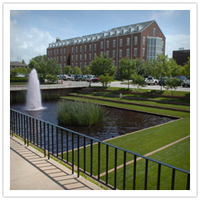
Chesapeake Energy Corporation has built one of the premier corporate working environments in the U.S. Future building projects are under way and will add additional office space upon completion in 2009 and beyond, to house our Oklahoma City staff of nearly 3,000 employees. |
| |
Chesapeake said in regulatory filings that McClendon’s overall pay reflects his role “in shaping the vision for the company and growing it into the largest independent producer of U.S. natural gas.”
There were similar examples of a mismatch between pay and stock performance throughout corporate America. At 104 companies in the AP sample, the chief executive’s bonus got fatter even though the stock price declined.
Carol Bowie, head of the Governance Institute at RiskMetrics Group, a financial risk management firm, said that is part of a troubling trend. “Executives have been richly rewarded over the last decade because of market trends, not necessarily because of superior performance. Now, when the market trend goes the other way, they want to be bailed out,” she said.
Motorola’s
Jha was an example of how many executives’ total pay is heavily weighted in stock options and stock grants. Overall, such compensation accounted for 58 percent of total pay in the AP’s larger sample of 387 companies.
Jha was a rising star at Qualcomm when Motorola wooed him last year with a package made up almost entirely of stock grants and options; the company valued them at $103.5 million on the day they were awarded in August, when the company’s stock was around $10 a share.
Even though
Motorola shares have since fallen to about $6, the 3.6 million stock grants he will receive over the next three years — effectively a signing bonus — still are worth more than $21 million.
But for
Jha to wind up realizing the $104.4 million that Motorola valued his 2008 compensation at, he must engineer a turnaround of its struggling cell phone business and propel Motorola shares well above $10 a share. His 16.5 million options don’t turn profitable until the stock reaches that level.
The 10 highest-paid CEOs on the AP list received packages totaling $538 million, $50 million less than the top 10 in 2007.
Four of the top earners in 2008 came from financial services companies —
Goldman Sachs, American Express, Citigroup and
JPMorgan Chase. All received money from the government’s Toxic Asset Relief Program. But most of their pay was inflated by stock options and awards granted early in the year for their performance the year before. And most of the options are under water. None got bonuses for their work in 2008.
Even more stark was
Morgan Stanley’s
John Mack, who received no raise, bonus or stock options. His salary and perks came to $1.2 million — 97 percent below the $41 million he made the year before. But it could have been worse.
Morgan Stanley and
Goldman Sachs were the only two of the big five Wall Street investment houses that survived the year.
In some cases, boards offered bonuses but CEOs turned them down.
Directors at
General Electric wanted to give
Jeffrey Immelt a bonus even though he missed every one of the six performance goals set for him, a list that includes revenue and earnings targets. The company explained in its proxy statement that Immelt “performed well in an extraordinarily tough business environment.”
Immelt declined.
“Earnings came in well below where we expected. The broad equity markets, and GE’s stock price, declined significantly in 2008,” Immelt explained on the company’s blog.
Robert Iger, head of
Walt Disney Co., gave up a $2.4 million bonus. He was eligible for it partly because Disney stock, which fell 3 percent during its last fiscal year, was less than the S&P 500’s 20 percent decline over the same period. (Iger still came in at No. 3 on the AP list for his total package — $51.1 million.)
Iger and others acted in the midst of populist anger over corporate riches at a time of growing economic pain for most of the country.
Already, the government is taking steps to limit bonuses and severance packages at companies that get bailout money. At the same time, those who set executive pay — board members, working with attorneys, corporate human resource officials and outside compensation consultants — are under increased pressure to clamp down, said Brill, the executive pay expert.
“Fear and self-preservation are great motivators,” he said. “No one wants to be named in a lawsuit or in any way get negative publicity.”
One of the nation’s top pay advisers, Frederic Cook, is calling on companies to tie pay to long-term corporate performance, not short-term fluctuations in the stock price.
“The American public and their elected representatives will no longer support companies who put their executives’ self-interests and net worth ahead of the company and its stakeholders,” Cook said in a March 18 letter to his clients, including
McDonald’s,
Gap and
Eastman Kodak.
Some companies are scaling back, with boards or CEOs driving such decisions.
Dow Chemical, which shuttered 20 plants and laid off 11 percent of its work force in recent months, gave CEO
Andrew Liveris stock awards worth $5 million in 2009, down from $11 million in 2008.
Southwest Airlines CEO
Gary Kelly voluntarily reduced his base salary by 10 percent, which would bring it down to about $400,000 for 2009, and he won’t get a raise until the company’s earnings improve.
But some companies are making it easier for executives to come out winners. Some are raising salaries. Others are tossing out old performance factors that tied pay to stock returns and profits and replacing them with measures some pay experts say are easier to achieve, such as revenue and cash flow targets.
Chip maker
Altera said it will let the board weigh “significant individual contributions” to justify executive bonuses even when the company “fails to meet a challenging financial performance metric.”
Altera also boosted the number of shares of restricted stock given to top executives because their current value is considered too low to retain them. CEO
John Daane will be eligible for up to 250,000 shares this year, versus 100,000 in 2008. He stands to make about $2.4 million more from the larger grant, based on the current stock price of about $16.
Given these crosscurrents, it’s too soon to say what happens next to executive pay.
Earlier this decade, public outrage followed corporate scandals at
Enron and
WorldCom, but attention shifted away as the stock market and economy rebounded.
“Every time we are in a crisis, you hear this is it for CEO pay,” said RiskMetrics’ Bowie. “The reality is, when the crisis passes, things tend to go back to business as usual.”
Associated Press
01.05.2009
http://www.msnbc.msn.com/id/30501718/
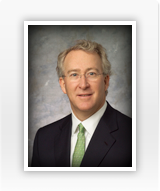
AUBREY K. MCCLENDON
Aubrey K. McClendon
Chairman of the Board and Chief Executive Officer
Chesapeake Energy Corporation
Aubrey K. McClendon has served as Chairman of the Board and Chief Executive Officer since co-founding the company in 1989.
From 1982 to 1989, Mr. McClendon was an independent producer of oil and gas.
Mr. McClendon graduated from Duke University in 1981.
Chesapeake Energy Corporation
P.O. Box 18496
Oklahoma City, OK 73154-0496
(405) 935-8000
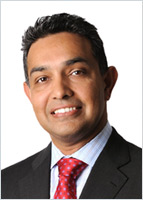
DR. SANJAY K. JHA
Dr. Sanjay K. Jha
Co-CEO, Motorola, Inc.
Chief Executive Officer, Mobile Devices
Dr. Jha joined Motorola in 2008 and serves as co-chief executive officer of Motorola, Inc. and chief executive officer of Motorola’s Mobile Devices business. He is also a member of Motorola’s Board of Directors.
Prior to joining Motorola, Jha served as chief operating officer of Qualcomm Incorporated where he oversaw Corporate Research and Development and Qualcomm Flarion Technologies (QFT). Jha also served as president of Qualcomm CDMA Technologies (QCT), Qualcomm’s chipset and software division.
Jha began his career at Qualcomm in 1994 as a senior engineer with the Qualcomm VLSI (very large-scale integration) group working on the Globalstar satellite phone, and later on the first 13k vocoder ASIC (application-specific integrated circuit).
In 1997, Jha was promoted to vice president of engineering, where he was responsible for leading the integrated-circuit engineering group. He led and oversaw the development of five generations of modem and cell site chipsets, both digital baseband and RF (radio frequency), and system software. Jha was promoted to senior vice president of engineering in 1998.
In 2002, Jha led the formation of Qualcomm Technologies & Ventures, where he managed both the technology investment portfolio and the new technology group as senior vice president and general manager. Jha became executive vice president of Qualcomm and president of QCT in 2003. He was named COO in December 2006.
Prior to joining Qualcomm, Jha held lead design engineering roles with Brooktree Corporation in San Diego, and GEC Hirst Research Labs in London, England.
Jha holds a Ph.D. in electronic and electrical engineering from the University of Strathclyde, Scotland. He received his bachelor’s of science degree in engineering from the University of Liverpool, England.



 subskrypcja RSS























 strona: 1 z 1