|
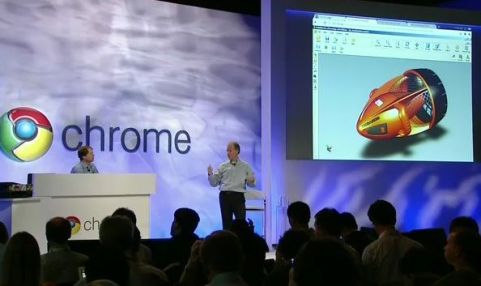
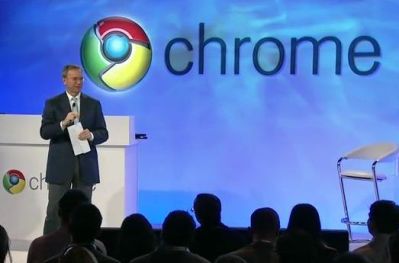
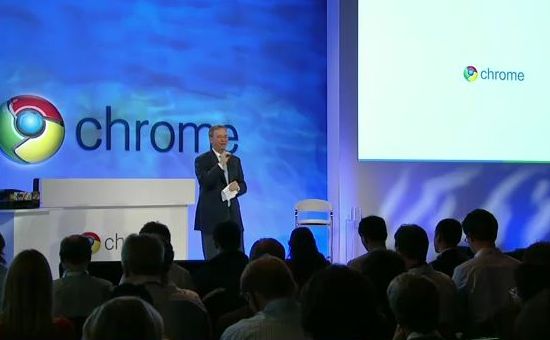
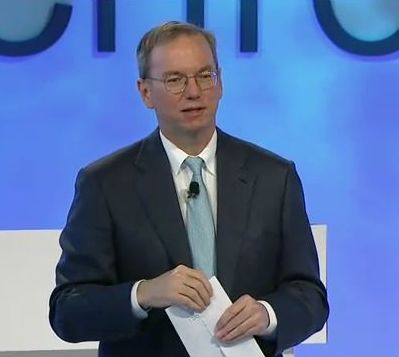
Chrome event on Tuesday, December 7, 2010.
Photo: Google / YouTube |
| |
Mountain View, Calif., USA - December 10, 2010
This blog post is a version of
Eric’s talk at our
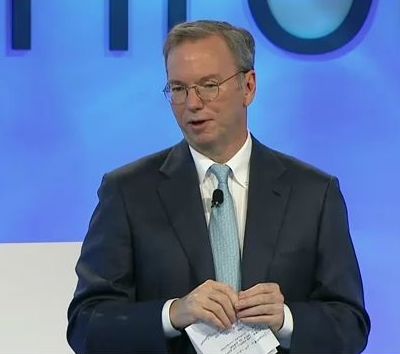
Chrome event on Tuesday, December 7, 2010.
You can watch his talk on
YouTube. - Ed.
Video
http://www.youtube.com/watch?v=ndzOD6GjzfY
On Tuesday, we announced a number of updates to
Chrome and
Chrome OS.
For me, these announcements were among the most important of my working life - demonstrating the real power of computer science to transform people’s lives.
 |
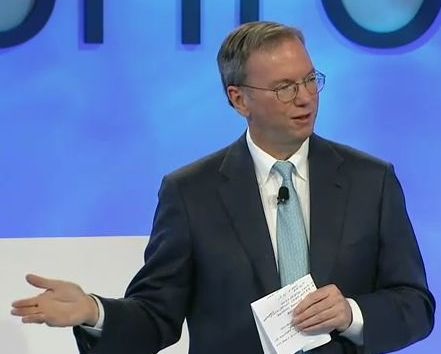
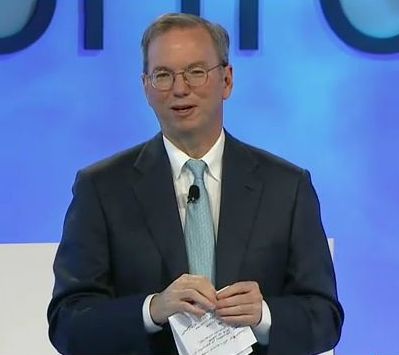
Eric Schmidt, Chairman and CEO of Google
Photo: Google / YouTube |
| |
It’s extraordinary how very complex platforms can produce beautifully simple solutions like
Chrome and
Chrome OS, which anyone can use from the get-go - as long as you get it right. And that’s very, very hard indeed as history has taught.
 |
Eric Schmidt, Chairman and CEO of Google
Photo: Google / YouTube |
| |
In 1983, I worked on a team at
Sun that was very proud to announce the
3M machines.
The "M’s" were one megapixel, one megahertz and one megabit. And as part of that, we introduced a diskless computer.
So this concept is not new - but then there are very few genuinely new ideas in computer science.
 |
Eric Schmidt, Chairman and CEO of Google
Photo: Google / YouTube |
| |
The last really new one was public key encryption back in 1975.
So we are always going back to the old ideas because we either loved them and they worked, or because they were right but we couldn’t make them work.
With hindsight, why has this been so hard?
After all, we had all the IT stuff. And then the web was invented.
But the web is not really cloud computing - it’s an enormously important source of information, probably the most important ever invented.
 |
Eric Schmidt, Chairman and CEO of Google
Photo: Google / YouTube |
| |
One major web innovation cycle happened in 1995 - remember the
Netscape IPO, Java and all of that - ultimately leading, in 1997, to an announcement by
Oracle (and bunch of other people including myself) called “
the network computer.”
It was exactly what the
Chrome team at Google was talking about on Tuesday.
Go back and read the language.
Use your favorite search engine and look at what I said.
 |
Eric Schmidt, Chairman and CEO of Google
Photo: Google / YouTube |
| |
So why did it fail, and why will things be different this time around?
Well, it’s clear that we were both right and wrong.
Right that the underlying problems - notably the complexity - really were problems.
But we failed because we couldn't build great apps on the web technologies of the time.
 |
Eric Schmidt, Chairman and CEO of Google
Photo: Google / YouTube |
| |
We could build information resources, so you could read things and get stuff done, but the web couldn’t compete with the scale and power of the then-existing desktop applications, which at the time were
Ole and
Win32 and various
Mac APIs.
Chrome and
Chrome OS are possible today for several reasons.
First,
time.
Moore's law is a factor of 1,000 in 15 years - so 15 years ago versus today, we have 1,000 times faster networks, CPUs and screens.
That’s a lot more horsepower at the networking and disk level, which means the disks are faster, and the network is more reliable.
 |
|
Chrome event on Tuesday, December 7, 2010.
Photo: Google / YouTube
|
| |
Then,
technology.
Asynchronous JavaScript XML, or
AJAX, came along in
2003/04, and it enabled the first really interesting web apps like
Gmail to be built.
All of a sudden people were like
“Wow! This web thing is actually kind of useful ... I can write some pretty interesting applications and they can update themselves!"
 |
|
Chrome event on Tuesday, December 7, 2010.
Photo: Google / YouTube
|
| |
And then a more general technology now known as
LAMP, which stands for
Linux, Apache, MySQL, PHP - and
Perl, Python and various other
Ps - evolved as a platform for the back-end.
So all of a sudden you had a client combined with a back-end that were powerful enough to sustain a new programming model. Instead of building these large monolithic programs, people would take snippets of code and aggregate them together in languages like
Java and
JavaScript.
 |
|
Chrome event on Tuesday, December 7, 2010.
Photo: Google / YouTube
|
| |
So with the great sophistication that was finally possible on the web, it was critical to have a modern browser that could handle it all.
Chrome just had to be built.
As usual,
Larry and
Sergey were way ahead of me on this.
From my very first day at
Google, they made clear that we should be in the browser business and the
OS business.
Not being interested in either, I said no.
But they rather sneakily hired a number of brilliant computer scientists to work on the amazingly successful
Firefox browser, which
Google helped fund through an advertising agreement - and that core team went on to create
Chrome.
 |
|
Chrome event on Tuesday, December 7, 2010.
Photo: Google / YouTube
|
| |
So we've gone from a world where we had reliable disks and unreliable networks, to a world where we have reliable networks and basically no disks.
Architecturally that’s a huge change - and with
HTML5 it is now finally possible to build the kind of powerful apps that you take for granted on a
PC or a
Macintosh on top of a browser platform.
With
Chrome OS, we have in development a viable third choice in desktop operating systems.
Before there was no cloud computing alternative - now we have a product which is fast, robust and scalable enough to support powerful platforms.
It’s something computer scientists have been dreaming about for a very, very long time.
 |
|
Eric Schmidt, Chairman and CEO of Google
Photo: Google / YouTube
|
| |
The kind of magic that we
could imagine 20 years ago, but couldn’t make real because we lacked the technology.
As developers start playing with our
beta Cr-48 Chrome OS computer, they’ll see that while it’s still early days it works unbelievably well.
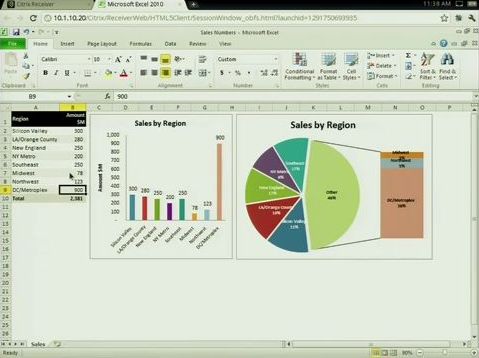
You can build everything that you used to mix and match with client software - taking full advantage of the capacity of the web.
I am very proud of what a small team, effectively working as a start-up within
Google, has achieved so quickly.
 |
|
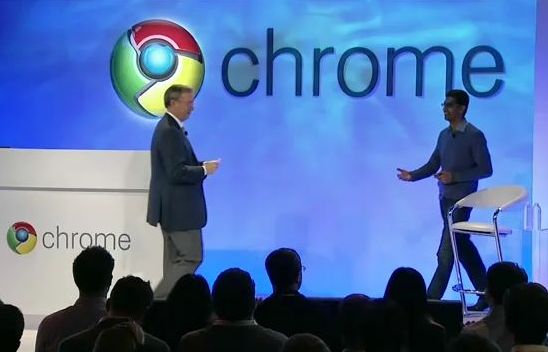
Eric Schmidt and Sundar Pichai
Photo: Google / YouTube
|
| |
In 20 years time, I’m certain that when we look back at history it will be clear that this was absolutely the right time to build these products.
Because they work - and they work at scale - I’m confident that they’ll go on to great success.
Welcome to the latest chapter of an epic journey in computing.
Welcome to Chrome OS.
Posted by Eric Schmidt, Chairman and CEO of Google
http://googleblog.blogspot.com/2010/12/cloud-computing-latest-chapter-in-epic.html
An update on Chrome, the Web Store and Chrome OS
Mountain View, Calif., USA - December 07, 2010
On the
Chrome team, we’re constantly amazed by the speed of innovation on the web.
We designed
Chrome to make the web shine, and we hope our upcoming efforts will help support this vibrant ecosystem even more.
 |
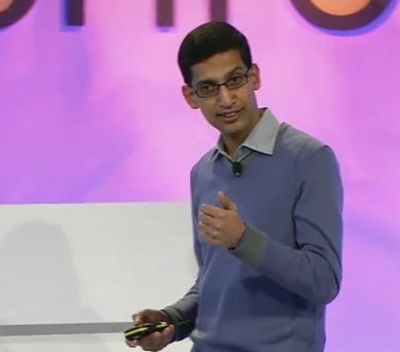
Sundar Pichai, Vice President of Product Management at Google
Photo: Google / YouTube |
| |
By making the web faster, helping people discover great apps, and making computers more fun to use, the next year of computing should be even more exciting than the last one.
Chrome
This year, the number of people using
Chrome has tripled from
40 to 120 million.
Speed is what people love most about
Chrome, and we’re always working to make the browser even faster.
 |
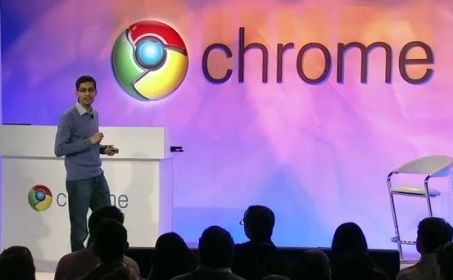
Sundar Pichai, Vice President of Product Management at Google
Photo: Google / YouTube |
| |
Therefore we’re bringing
Google Instant to the
Omnibox, showing search results and loading web pages as you type.
We’ve also overhauled
V8, Chrome’s JavaScript engine.
 |
Sundar Pichai, Vice President of Product Management at Google
Photo: Google / YouTube |
| |
It now runs complex
JavaScript programs up to twice as fast as before.
These two features are available in our early access channels and will be rolling out to everyone soon.
Chrome Web Store
Today the
Chrome Web Store is open for business.
Developers have already started uploading apps, and we expect the number to grow over time.
 |
Sundar Pichai, Vice President of Product Management at Google
Photo: Google / YouTube |
| |
Right now the store is only available in the
U.S., but will expand to many countries and currencies early next year.
The store will be featured prominently in
Chrome, helping people discover great apps and developers reach millions of users around the world.
Chrome OS
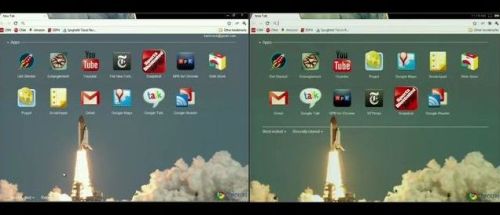
Last year, we announced our effort to design an operating system that is built and optimized for the web.
Many people already spend all their time in a web browser, and by building an operating system that is essentially a browser, we can make computers faster, much simpler and fundamentally more secure.
 |
|
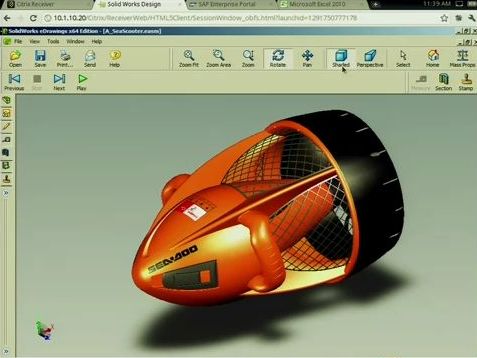
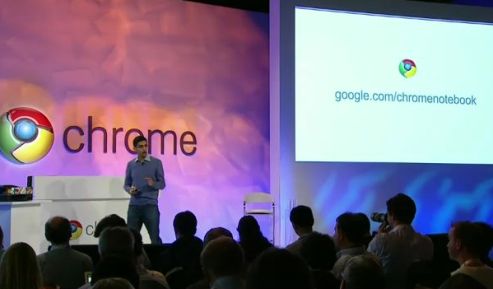
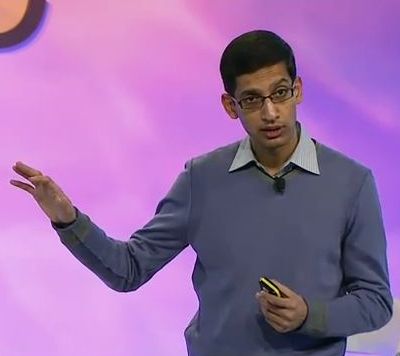
Chrome event on Tuesday, December 7, 2010.
Photo: Google / YouTube
|
| |
We’re not done yet, but
Chrome OS is at the stage where we need feedback from real users. Some of the features of
Chrome OS require
new hardware, but we didn’t want to sell pre-beta computers.
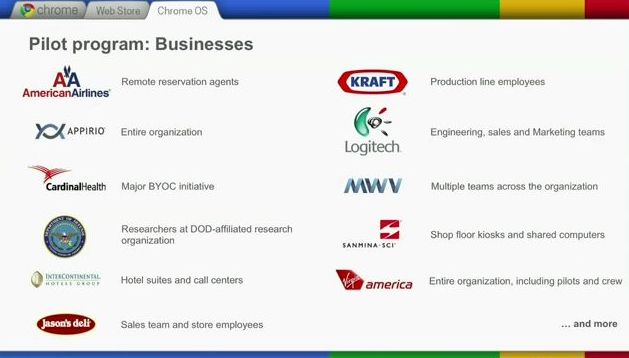
Instead we’re launching a pilot program where we will give test notebooks to qualified users, developers, schools and businesses.
We're starting with the
U.S. and will expand to other countries once we get the necessary certifications.
To participate in the pilot program, visit the
Chrome notebook website.
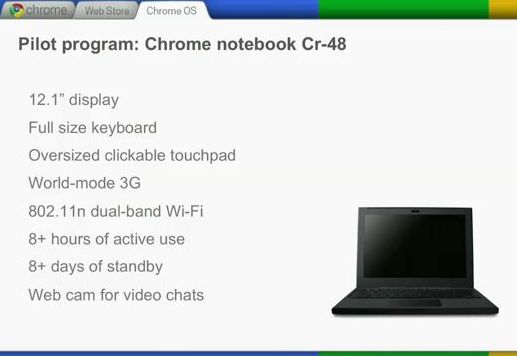
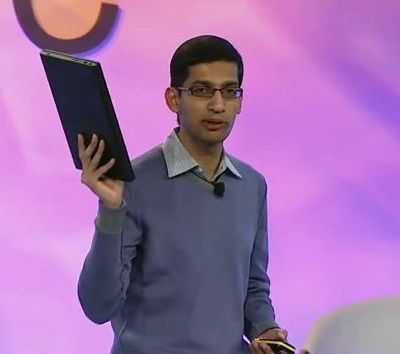
The test notebooks exist only to test the software - they are black, have no branding, no logos, no stickers, nothing.
 |
|
Chrome event on Tuesday, December 7, 2010.
Photo: Google / YouTube
|
| |
They do have
12.1 inch screens, full-sized keyboards and
touch pads,
integrated 3G from Verizon,
eight hours of battery life and
eight days of standby time.
Chrome notebooks are designed to reach the web instantly, are easy to share among friends and family, and simply by logging in, all of your apps, bookmarks and other browser settings are there.
Setting up a new machine takes less than a minute.
And even at this early stage, we feel there is no consumer or business operating system that is more secure.
 |
|
Sundar Pichai with Chrome notebook Cr-48.
Photo: Google / YouTube
|
| |
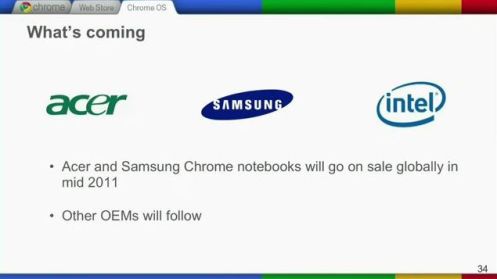
In the first half of next year
Chrome notebooks will be available for sale from
Acer and
Samsung. More manufacturers will follow.
Also,
Chrome OS is designed to work across a wide range of screen sizes and form factors, enabling our partners to deliver computing devices beyond notebooks.
We’re excited to get
Chrome notebooks into the hands of users.
The data from our test pilots is key to building something wonderful.
We look forward to working together to make computers better.
Posted by Linus Upson, VP Engineering and Sundar Pichai, VP Product Management at Google
http://googleblog.blogspot.com/2010/12/update-on-chrome-web-store-and-chrome.html
Google Chrome takes to the Clouds with Free Wi-Fi on AirTran, Delta and Virgin America Flights
Mountain View, Calif., USA - November 08, 2010
Today, the
Google Chrome browser team announced that it has teamed up with
AirTran, Delta and
Virgin America, to provide
free Gogo® Inflight Internet to their passengers throughout the holiday season.
Travelers flying on AirTran, Delta or
Virgin America between November 20, 2010 and January 2, 2011 will have
free Wi-Fi on any of their domestic flights to check email, watch videos and surf the web from 30,000 feet above the ground.
As the three airlines that have outfitted their entire domestic fleet with in-flight
Wi-Fi, this promotion will bring free Internet service to more than
700 planes and approximately
15 million expected passengers this holiday season.
“We are constantly working to help provide a better web experience to users around the world,” said
Sundar Pichai, Vice President of Product Management at Google.
“Whether it be building a better browser with Chrome or bringing free Wi-Fi to air travelers this holiday season, we are constantly innovating to ensure users’ access to the web is fast, simple and seamless.”
This season marks the second straight year that
Google has provided
free Wi-Fi to travelers over the holiday season.
Last year,
Google worked with Virgin America as well as more than
50 airports to provide free Internet both on the ground and in the air.
This year, the
Chrome team is continuing that mission by joining with
AirTran and
Delta in addition to
Virgin America, to concentrate on connecting travelers while they’re in the sky.
First launched just over two years ago,
Google’s web browser, Chrome has become known worldwide for its speed, simplicity and security.
With a sleek user interface, cutting-edge speed improvements and an innovative security architecture,
Chrome lets users browse the modern web faster and safer than ever before.
To read more about the promotion, please visit:
www.freeholidaywifi.com
To learn more about
Google Chrome, please visit:
www.google.com/chrome
About Google Inc.
Google’s innovative search technologies connect millions of people around the world with information every day.
Founded in 1998 by Stanford Ph.D. students Larry Page and Sergey Brin, Google today is a top web property in all major global markets.
Google’s targeted advertising program provides businesses of all sizes with measurable results, while enhancing the overall web experience for users.
Google is headquartered in Silicon Valley with offices throughout the
Americas, Europe and
Asia.
For more information, visit
www.google.com
Contact:
Eitan Bencuya
Google Corporate Communications
+1 (650) 930-3555
ebencuya@google.com
http://www.google.com/press/pressrel/20101108_wifi.html
Video
Chrome Event - 12/07/2010
http://www.youtube.com/watch?v=uQzAUaZ26co&feature
Video
Chrome Event 12/7/10 (4 of 4) - Eric's Speech & Closing
http://www.youtube.com/watch?v=ndzOD6GjzfY
SOURCE:
http://googleblog.blogspot.com/2010/12/update-on-chrome-web-store-and-chrome.html
http://googleblog.blogspot.com/2010/12/cloud-computing-latest-chapter-in-epic.html
ASTROMAN magazine



 subskrypcja RSS





















 strona: 1 z 1