 |
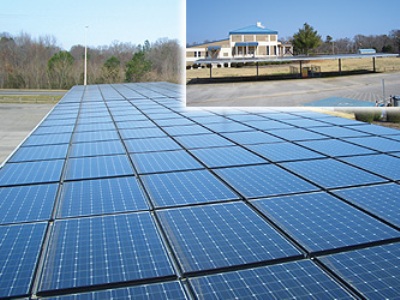
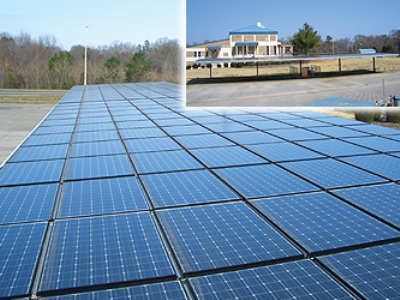
Solar Carport System Florence, Alabama, USA (36kW)
Design/Construction: SunWize Technologies
Photo: SANYO Solar |
| |
Munich, Germany – September 15, 2010
Having a solar system on your own roof means independence of rising energy prices and earning cash at the same time.
Moreover, solar energy respects the environment and is a contribution to combating climate change. But before a homeowner gets connected to the grid, several things have to be considered.
Shigeki Komatsu, Director of Solar Business Division at SANYO Component Europe GmbH gives answers to the most important questions.
1. What are the advantages and disadvantages of photovoltaic systems?
Due to guaranteed yields over years, solar energy is a safe financial investment.
The warranty premium which the local energy supplying company has to pay for 20 years to private owners of solar systems is higher than the costs for “electricity from power providers”. Furthermore, the sun almost certainly won’t run out of steam – thereby providing independence from electricity producers and from other, non-sustainable energy sources.
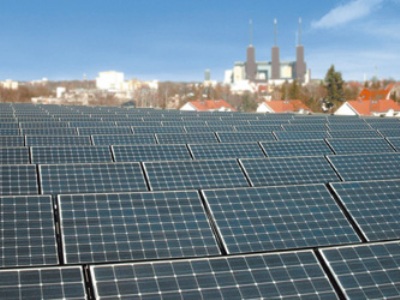 |
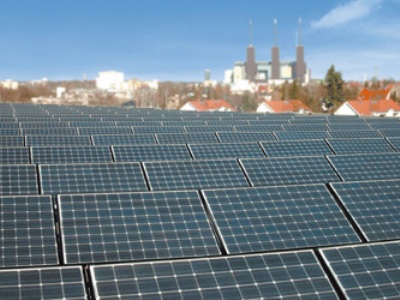
Berlin City Gymnasium, Berlin, Germany (40kW)
Design/Construction: Schoenau AG
Photo: SANYO Solar |
| |
Already today photovoltaic systems cover oneself against rising costs for fossil energy.
But, before feeding the grid with their own solar cells, home owners have to make considerable investments: A 5-kilowatt PV system, which is the typical size installed by four-person-households is at current prices, approx. 30.000 Euro.
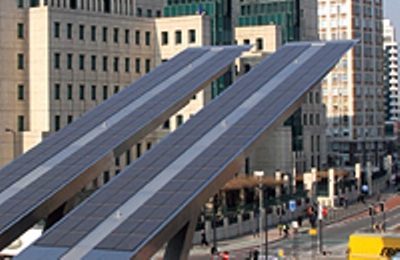 |
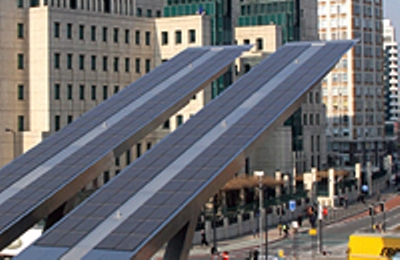
Bus terminal, London, England (30kW)
Design/Construction: Solar Century
Photo: SANYO Solar |
| |
An initial investment, which is a burden in short and medium terms: The capital is tied up for a long time and loans are typically agreed to fund the purchase.
Furthermore, running costs for maintenance, insurance and, in most of the cases, external financing has to be paid.
Solar energy = an investment for the future
Once a decision to invest has been made, there is no doubt that the individual will be playing their role in helping to preserve the environment: Avoiding the combustion of fossil resources saves natural resources and reduces the air pollution, the CO2 emission is close to 0.
Despite the comparatively high initial investment, solar systems provide a high return on investment which boost the property value and enhances ones pension.
2. Does a photovoltaic system pay off?
Of late, there have been some changes in the “Erneuerbare Energie-Gesetz” (EEG), whereby the subsidy tariff for solar installations has been lowered. In spite of this, the installation of photovoltaic modules on ones roof will still pay off for German house owners in 2010 and 2011 and according to the magazine Finanztest, remains an excellent capital investment irrespective of the changes in the EEG.
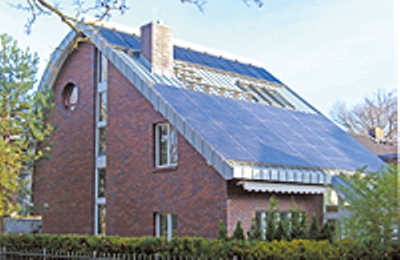 |
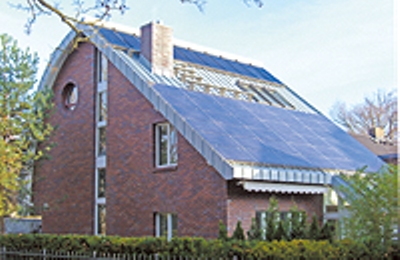
Architektenhaus Berlin, Germany (9.03kW)
Design/Construction: Schoenau AG
Photo: SANYO Solar |
| |
Even an averaged generation of electricity is sufficient for running a solar plant profitably in the future. Although the German government agreed on a reduction of the reimbursement rate, the prices for solar energy plants decrease and therewith counterbalance the reduction of the compensation for electricity fed into the grid.
Solar systems are an interesting investment because the government guarantees the long term purchase of the solar energy at a fixed price: Excess generated electricity is fed back into the National Grid and local suppliers of electricity are required to pay a fixed amount (per kilowatt hour) for 20 years.
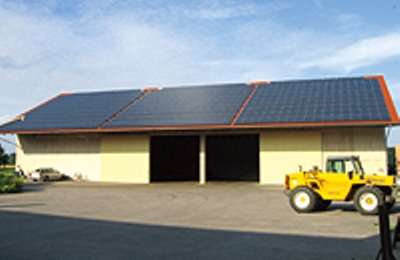 |
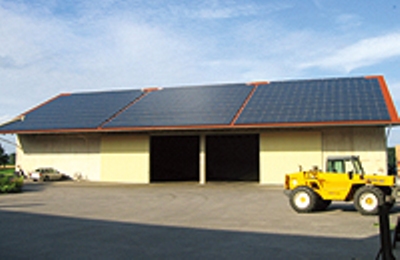
Crop warehouse, Engelsberg, Germany (100kW)
Design: HaWi Energietechnik GmbH, Construction: Abel Elektrotechnik
Photo: SANYO Solar |
| |
Starting from July 1, 2010, the amount is 34.05 Cent per kilowatt hour in case of less than 30kW.
This amount is considerably higher than the cost of purchasing electricity from local suppliers which warrants a premium for your contribution, not to mention the generated electricity which will have already been consumed and reduced your necessity to purchase from local suppliers.
The more efficient the solar system, the higher the yield
In times of insecure financial investments, the investment in a solar system is a worthwhile option. But in countries like Germany, which are not very sun-blessed, the following fact must be noted: The more efficient the solar system, the higher the yield.
At this, it is important to pay attention to the efficiency rate of the system, which is the yield of electrical capacity in proportion to the solar radiation.
The efficiency rate of modern solar systems rise steadily, for instance, the module efficiency rate of SANYO HIT is approximately 18.6% amongst the highest in the industry.
3. Is my house suitable for a solar plant?
The good news is that there is a suitable solution for every type of building and roof when the static conditions are met. An alignment towards the south and an inclination of about 30° provides the very best results.
Before making the decision whether to buy a solar system or not, an experienced installer should look at the roof. Following this, the planning – from the module layout to the yield estimate – begins.
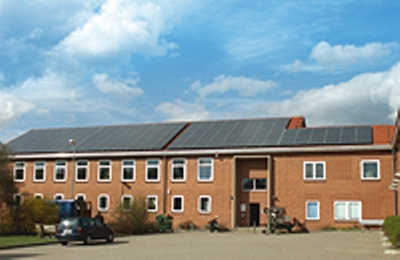 |
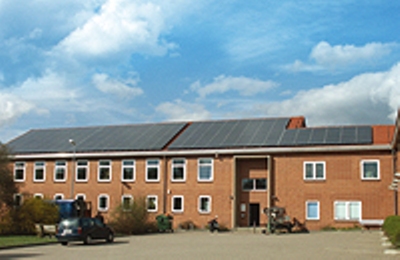
Annex building of the town hall, Ronnenberg, Germany (44kW)
Design/Construction: AS Solar GmbH
Photo: SANYO Solar |
| |
The energy yield ranges according to the amount of naturally occurring solar radiation at the location of the system. Other possible factors in the surrounding areas such as shadow may also influence the performance of the system.
Whilst it is not possible to do anything to counter the weather at the place of domicile, there is still the possibility to avoid shadow.
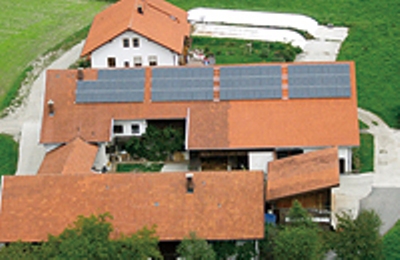 |
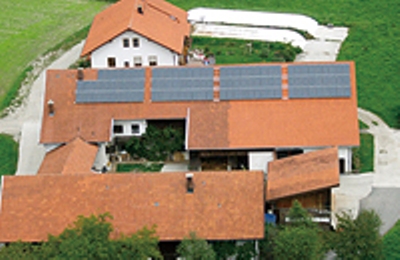
Burgkirchen, Germany (23.22kW)
Design: HaWi Energietechnik GmbH, Construction: Deser Elektrotechnik OHG
Photo: SANYO Solar |
| |
Building development in the neighborhood, trees, antennas etc. should also be taken into consideration. An all-season shadow can decrease the energy yield.
Yield estimate at a glance – The SANYO online solar calculator
The produced amount of solar energy depends heavily on the region, the alignment and the installation degree. In order to calculate exactly the possible solar yield for the own home, there are many suitable online tools available such as the SANYO online calculator.
The calculator, which is available on www.sanyo-solar.eu , provides the homeowner with an exact yield analysis.
4. Advise for the purchasing decision – What kind of solar systems are available on the market?
Nowadays, home owners can chose between three established types of solar modules: solar cells made of monocrystalline silicon, polycrystalline silicon and thin film solar cells.
Most of them are made of silicon but differ in use, energy output and production.
Monocrystalline solar cells
Monocrystalline solar cells can achieve the highest efficiency rate (approx. 16-18%), which makes them especially suitable for smaller roofs.
However, due to energy-rich production they are slightly costly.
Polycrystalline solar cells
More than 50% of the solar plants in use are composed of multicrystalline cells.
The cell efficiency is about 2% lower those of monocrystalline cells, but their production uses less energy which means that the lower production costs can be passed onto consumers in the form of more attractive prices.
Amorphous Solar cells
Amorphous silicon cells are also often known as Thin Film cells, when a silicon layer is intercepted on glass or other substratum materials.
The layer is less than 1 μm wide and consequently production costs are significantly lower due to the lower material costs. But the efficiency of amorphous cells is much lower than that of the other crystalline cell types.
The combination of features of monocrystalline and thin film offers the best in efficiency.
The SANYO HIT® modules consist of such a combination.
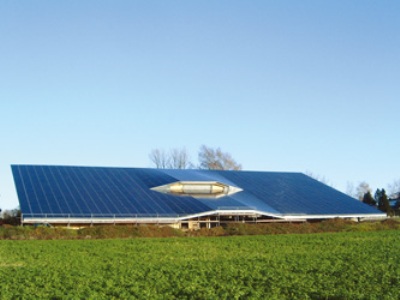 |
A house of the fire brigade, Alfdorf, Germany (256.5kW)
Design : Elektro Abele, Photo : Donauer Solartechnik Vertriebs GmbH
Photo: SANYO Solar |
| |
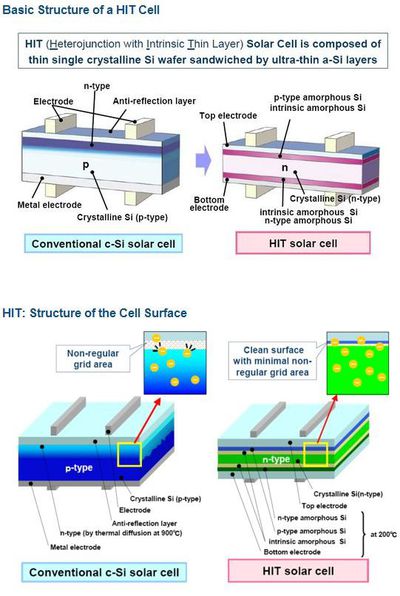
The hybrid structure consists of monocrystalline silicon wafer which is sandwiched with thin amorphous layers. Unlike crystalline only cells, combined materials can sustain extremely high efficiency levels at higher temperatures.
The modules of the new HIT® N-Series will be available from September 2010.
These modules consist of 72 cells and achieve an stabilized efficiency rate of 18.6% (HIT-235SE10), a worldwide maximum value.
Thanks to this extraordinary high efficiency, SANYO solar modules can produce more energy per square meter and need less space on the roof than similar modules of competitor companies.
5. Advice for purchase decision – What to consider when buying a solar module?
A solar system is a profitable investment. But it only pays off when the system works for 20 years which is the duration of the feed-in tariff subsidy.
An investment into the wrong type of technology can be a costly mistake since it will have a negative impact on the income generated through the feed-in tariff. It is therefore advisable to have a close look not only at the type of technology but also at guarantees and seals of approval before buying a system.
 |
|
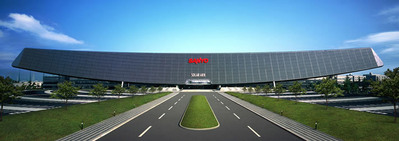
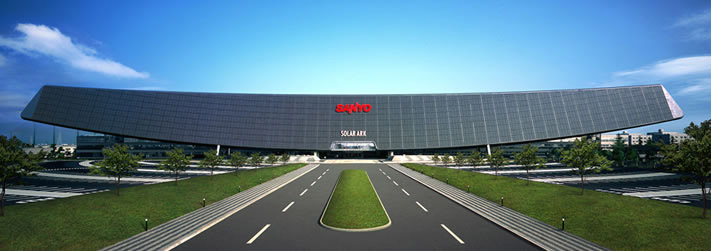
The Solar Ark is a symbol of goal of achieving a "clean energy society." As well as being a center for local community activities, it has become a local landmark. The design of the Solar Ark was inspired by the vision of an ark embarking onto a journey toward the 21st Century. Only four columns are used to support the entire structure, thus giving the impression of floating in the air.
Photo: SANYO Solar
|
| |
Normally, brand manufacturers offer a guarantee of 5-10 years for the product and production defects. When buying a system, the module power should not be lower than the rated power. Furthermore the manufacturer should guarantee a minimum performance for more than 20 years.
For brand manufacturers like SANYO, it is standard to have seals of approval for their products as low failure rates can only be guaranteed after extensive product testing. When buying solar cells, it is advisable to watch out specifically for IEC and ISO standards.
Here are some examples:
IEC 61215: this is for verifying that modules can withstand the worst weather conditions. Modules must pass static load tests in climate chambers with hail and ice to.
IEC standard 61730-1 / -2: these guarantee that the products have passed safety inspections
ISO 9001: this is a certification for quality management
6. Where to get independent advice and information?
The Bundesverband für Solarwirtschaft e.V. (BSW) offers detailed information such as a technology and grant advisory on
www.solarwirtschaft.de
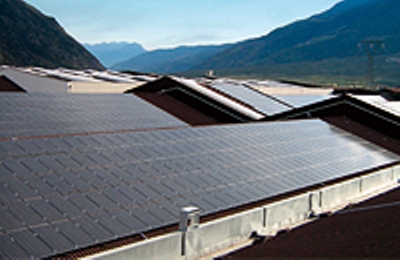 |
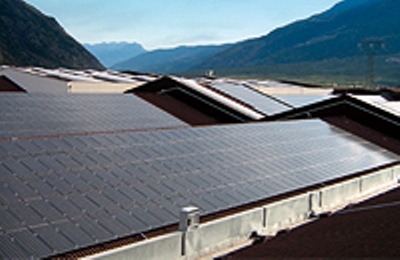
Factory roof, Meran, Italy (837kW)
Design/Construction: S.E.project
Photo: SANYO Solar |
| |
The consumer advice centres (Verbraucherzentralen) are always a good place to go, too. Moreover, some brand manufacturers also offer support when it comes to the purchase of a solar system.
For example, SANYO Solar offers a dealer database on www.sanyo-solar.eu in order to set up contact with installers and specialists in the region.
It is advisable to get in contact with an accredited professional installer as soon as possible.
7. Financial aid: What to consider when financing a solar system?
Due to the high acquisition costs, most home owners finance their solar systems over many years. It is advisable to act with caution when financing the solar system, because it is not only about finding a cheap loan – fiscal aspects play an important role, too.
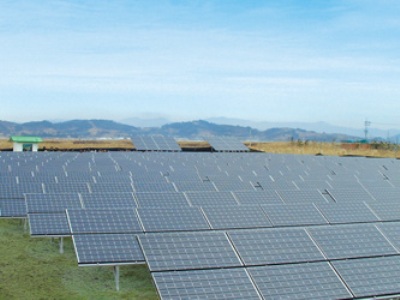 |
3MW PV Generation Plant Project, Republic of Korea (150kW)
Design/Construction: Seoul Marine Co.,Ltd.
Photo: SANYO Solar |
| |
Everybody who feeds the grid is a sole trader, but does not automatically need to register a trade.
Tax benefits are multifaceted: Energy operators can set off investment costs and the maintenance effort against tax liability and get back incoming tax sales payments from the tax and revenue office.
Furthermore, the owner is allowed to offset the credit costs against the solar income. That way, the owner does not need to pay the full duty on income.
For financing the solar system, many people choose the photovoltaic loan of the KfW Bank. This programme supports photovoltaic plants with 100% loans up to 50.000 Euros.
Currently (August 2010), the interest rate is 2,25% p.a., normally its duration is up to 20 years with a maximum of three redemption-free years.
However, it is not possible to file for state-aided KfW loans at the KfW Bank itself, but only at the house bank.
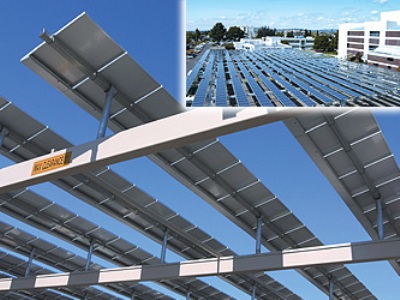 |
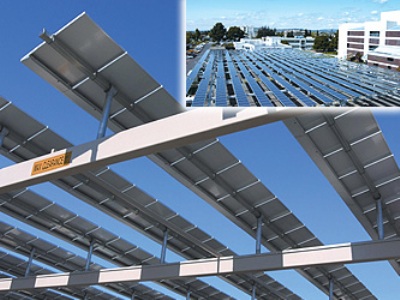
Solar Tracking Carport System Hayward Public Works Annex, Alameda County, California, USA (252kW)
Design/Construction: PowerLight Corporation
Photo: SANYO Solar |
| |
The funds of this programme are available for private and non-profit applicants.
However, the state only provides funds within a certain limit. Therefore it is important to get in contact with an expert at an early stage in order to discuss the various factors which are important for the financing and acquisition.
8. Installation: How important is a good specialist dealer?
A solar system is a long-term investment.
Therefore it is advisable to hire a qualified specialist firm which manages the acquisition and installation.
Only solar modules which were bought at specialist dealers come with the required EC declaration of conformity and the required certificates which assure the manufacturers’ guarantee. Furthermore, the installer takes responsibility for informing the acquirer about funding, duties to obtain permits and other important factors.
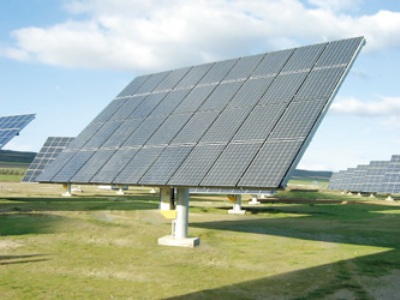 |
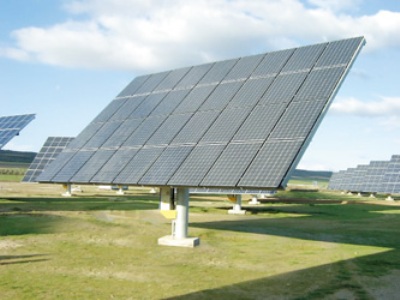
Solar Tracking System, Sesma, Spain (6.84kW)
Design/Construction: Acciona Solar S.A.
Photo: SANYO Solar |
| |
The specialist dealer of confidence is also the first contact person when it is necessary to replace spare parts.
Competent specialist dealer can be found on the informative website
www.sanyo-solar.eu
Proven quality: The solar system passport
With the so-called “system passport”, the Bundesverband für Solarwirtschaft e.V. (BSW) and the Zentralverband der Deutschen Elektro- und Informationstechnischen Handwerke (ZVHE) help with finding the right specialist dealer.
With a system passport, any ordinary person can check if the installer has followed the correct code of conduct and if he has handed over a high quality product.
More than 800 German companies have already filed for a system passport. It is also good to know that many solar insurances offer lower premiums after submitting this.
9. Bringing into service: What to do before feeding the grid?
Before commissioning the solar system, conditions for feed-in tariffs should be discussed with the electricity network operator.
According to the Erneuerbare-Energie-Gesetz (EEG), operators of local power networks are legally obligated to buy all the power which is produced by solar systems. An additional contractual agreement, which is requested by some network operators, is not necessary.
If you do decide to enter into a contractual agreement with electricity providers, it is always advisable to seek professional legal advise before signing the documentation.
Please note that sometimes, financing institutions expect the owner to submit an agreement about the compensation for electricity fed into the grid with its network operator for guarantee reasons.
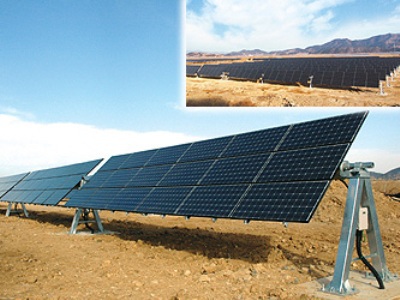 |
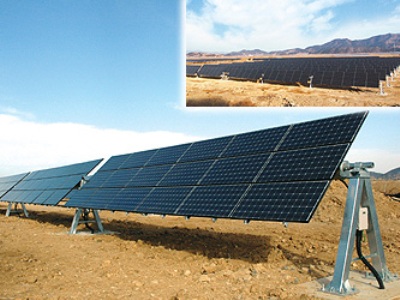
3MW PV Generation Plant Project, Suncheon, Republic of Korea (700kW)
Design/Construction: Seoul Marine Co.,Ltd.
Photo: SANYO Solar |
| |
Once the solar system is installed and fully registered, the installer must explain how the different components operate.
The installer must also clearly explain the maintenance, readout processes and, if applicable, the cleaning processes.
Now the solar cells on the roof can start producing power.
10. The time after: Which insurances make sense?
No solar system is totally protected against operating failure.
Therefore, it is advisable to hedge one’s bet.
The already existing insurances like the building insurance or the contents insurance are not enough. The building insurance does not cover theft and pilferage from the FIT is not guaranteed by contents insurance.
Since the contents insurance only covers a small part of solar plants, it is even more advisable to contract an independent photovoltaic insurance.
A good photovoltaic insurance covers the following factors:
- A
photovoltaic indemnity insurance which covers damages to the photovoltaic system – e.g. through short-circuit, lightning strikes, wild animals or vandalism.
- A
third-party insurance for operators covers for example claims like damages through a fire caused by short-circuits, playing children who got injured or expensive cars which were damaged by pieces falling from the roof.
-The
photovoltaic contingency insurance covers breakdowns of photovoltaic systems – e.g. when the income decreases due to extremely long winters.
An
extensive photovoltaic insurance can protect the owner from large financial loss.
By now, there are several insurances which offer such insurances so it is always advisable to compare these before making a purchase decision.
Company Outline
In 1980,
SANYO was the first company starting mass production of amorphous solar cells.
In 1997, mass production of the high efficiency, high output
HIT® Photovoltaic Modules was started.
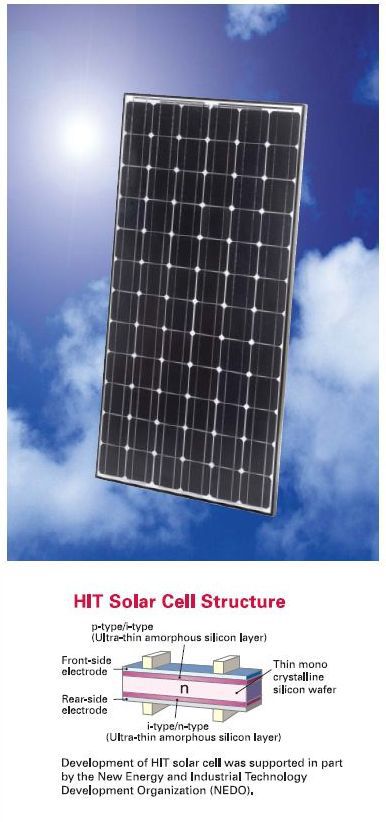
The HIT® Solar cells (thin mono crystalline silicon wafer surrounded by ultra-thin amorphous silicon layers) are highly appreciated by the market not only by the characteristics of high efficiency and outstanding temperature characteristics but also because of their very high reliability.
In 2004,
SANYO Component Europe GmbH, the
European sales headquarter was established, followed by the module assembly production site in
Hungary in 2005.
SANYO Component Europe GmbH is a member of
PV CYCLE and is the first member to have signed a binding participation agreement with the organisation.
For additional information or visual materials, please contact:
cayenne pr
Katja Pfeifer
Rheinallee 9
40549 Düsseldorf
germany
Phone: 0211 / 97769-181
Fax: 0211 / 97769-410
E-Mail: k.pfeifer@cayenne.de
http://www.sanyo-solar.eu/
SANYO HIT photovoltaic module
Fossil fuels such as oil and natural gas provide us with a comfortable life style. However, they also have a serious negative impact on the environment and are partially to blame for global warming.
 |
|
HIT Solar Cell
Photo: SANYO Solar
|
| |
That's why environmentally-friendly photovoltaic power generation is gaining in significance, especially since it is a renewable energy source that is available without limits.
SANYO is leading the way in research and development as a pioneer in the field of photovoltaic power generations.
SANYO's solar technology is making an important contribution to improve living standard in an environmentally-friendly way and it is leading us into a bright future.
SANYO Solar is one of the most important international solar companies.
For more than 30 years we have been setting standards for the development of new, innovative und high performance photovoltaic products.
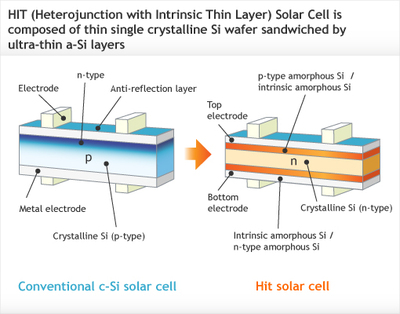 |
HIT Solar Cell
Photo: SANYO Solar |
| |
Because
SANYO has focused on renewable energies technologies, we are significantly contributing to ensuring that the rising worldwide demand for energy can continue to be met in the future.
The SANYO HIT (Heterojunction with Intrinsic Thin layer) solar cell is made of a thin mono crystalline silicon wafer surrounded by ultra-thin amorphous silicon layers.
This product provides the industry’s leading performance and value using state-of-the-art manufacturing techniques.
The HIT cell and module have very high conversion efficiency in mass production.
Even at high temperatures, the
HIT solar cell can maintain higher efficiency then a conventional crystalline silicon solar cell.
 |
HIT Solar Cell
Photo: SANYO Solar |
| |
HIT can generate more
clean Energy than other conventional crystalline solar cells.
SANYO HIT solar modules are 100% emission free, have no moving parts and produce no noise.
The dimensions of the
HIT modules allow space-saving installation and achievement of maximum output power possible on given roof area.
High Efficiency
HIT Power solar panels are leaders in sunlight conversion efficiency.
Obtain maximum power within a fixed amount of space.
Save money using fewer system attachments and racking materials, and reduce costs by spending less time installing per watt.
Power Guarantee
SANYO’s power ratings for HIT Power panels guarantee customers receive 100% of the nameplate rated power (or more) at the time of purchase, enabling owners to generate more kWh per rated watt, quicken investment returns, and help realize complete customer satisfaction.
Temperature Performance
As temperatures rise, HIT Power solar panels produce 10% or more electricity (kWh) than conventional crystalline silicon solar panels at the same temperature.
Proprietary Technology
HIT solar cells are hybrids of single crystalline silicon surrounded by ultra-thin amorphous silicon layers, and are available solely from SANYO.
HIT Power models are ideal for grid-connected solar systems, areas with performance based incentives, and renewable energy credits.
Structural Strength
HIT Power panels have a double-wall black anodized aluminum frame for extra strength, and are tested to 60PSF.
The panels come pre-equipped with a touch safe junction box, USE-2 outdoor rated cables, MC4™ locking connectors, and are UL 1703 safety rated for wind, hail, and fire.
Valuable Features
HIT Power solar panels operate silently, have no moving parts and are among the lightest per watt in the industry.
Unique eco-packaging minimizes cardboard waste at the job site.
The packing density of the panels reduces transportation, fuel, and storage costs per installed watt.
Quality Products
SANYO silicon wafers located inside HIT solar panels are made in California USA, and the panels are assembled in an ISO 9001 (quality), 14001 (environment), and 18001 (safety) certified factory.
The panels have a Limited 20-Year Power Output and 5-Year Product Workmanship Warranty.
30 years’ SANYO Solar History
More than 30 years’ experience in solar technology have earned
SANYO a reputation as a reliable partner.
1975
SANYO starts development of solar cells from amorphous silicon.
1980
SANYO is the first manufacturer worldwide commercially to produce solar cells made of amorphous silicon.
1992
SANYO is the first manufacturer in Japan to equip residential buildings with photovoltaic systems that generate energy to be fed into the power grid.
1994
Market introduction of photovoltaic systems for private use on residential dwellings.
1997
SANYO HIT Solar Cells (Heterojunction with Intrinsic Thin-layer) enter serial production.
Market introduction of 170 W Solar Modules.
Cell efficiency ratio: 16.4%; Module efficiency ratio: 14.4%.
1998
Market introduction of 180 W Photovoltaic Modules.
Cell efficiency ratio: 17.4%; Module efficiency ratio: 15.2%.
2001
Completion of the world’s largest solar power plant on the site of the
SANYO facility in Gifu: the SANYO Solar Ark.
2002
Market introduction of the
190 W Photovoltaic Module.
Cell efficiency ratio: 18.5%; Module efficiency ratio: 16.1%
2003
SANYO enhances the market with
200 W Photovoltaic Modules with the world’s highest efficiency ratio.
The Nishikinohama (Osaka Prefecture) factory is built for the
production of Photovoltaic Cells / Modules.
2005
The
SANYO factory in Hungary begins serial production of
HIT Photovoltaic Modules.
2007
SANYO exceeds the 100 million mark in the production of HIT Solar Cells.
Cell efficiency ratio in Research and Development: 22.3%.
Expansion of the Hungary facility for the
production of the HIT HD Modules.
Market introduction of the
215 W Photovoltaic Modules.
Cell efficiency ratio: 19.3%; Module efficiency ratio: 17.2%.
2008
SANYO introduces the
HDE1 product line: Unique honeycomb design is the result of technological developments for the utilisation of silicon reserves.
2009
SANYO introduces the high performance
220 Watt HIT Photovoltaic Modules to the European market.
At 17.4%, the
SANYO HIT Photovoltaic Module had the world’s highest efficiency ratio.
2010
SANYO introduces new high performance
235 Watt HIT Photovoltaic Module -the N-type- to the European market.
At 18.6%, the
SANYO HIT Photovoltaic Module has at the moment the world’s highest efficiency ratio.
http://www.sanyo-solar.eu/en/about-sanyo-solar/30-years-solar-history/
ASTROMAN Magazine – 18.01.2010
Toshiba Awarded Major Order for Microgrid Systems by The Okinawa Electric Power Company, Inc.
http://www.astroman.com.pl/index.php?mod=magazine&a=read&id=646
ASTROMAN Magazine – 03.10.2009
EWE increases its commitment to solar energy
http://www.astroman.com.pl/index.php?mod=magazine&a=read&id=583
ASTROMAN Magazine – 28.09.2009
The DESERTEC Concept for Europe, the Middle East and North Africa
http://www.astroman.com.pl/index.php?mod=magazine&a=read&id=581
ASTROMAN Magazine – 08.02.2009
Dom podążający za słońcem
http://www.astroman.com.pl/index.php?mod=magazine&a=read&id=447
ASTROMAN Magazine – 22.08.2009
Lieberose solar farm becomes Germany's biggest, world's second-biggest
http://www.astroman.com.pl/index.php?mod=magazine&a=read&id=562
ASTROMAN Magazine – 26.09.2010
SANYO Solar Ark
http://www.astroman.com.pl/index.php?mod=magazine&a=read&id=810



 subskrypcja RSS





















 strona: 1 z 1